
1991 Penny and the Close AM Myth: Why This Year Is Often Misidentified
The 1991 penny is often mentioned in the same breath as the famous Close AM variety. That connection is wrong. There is no confirmed 1991 Close AM circulation cent. Yet the claim appears online again and again.
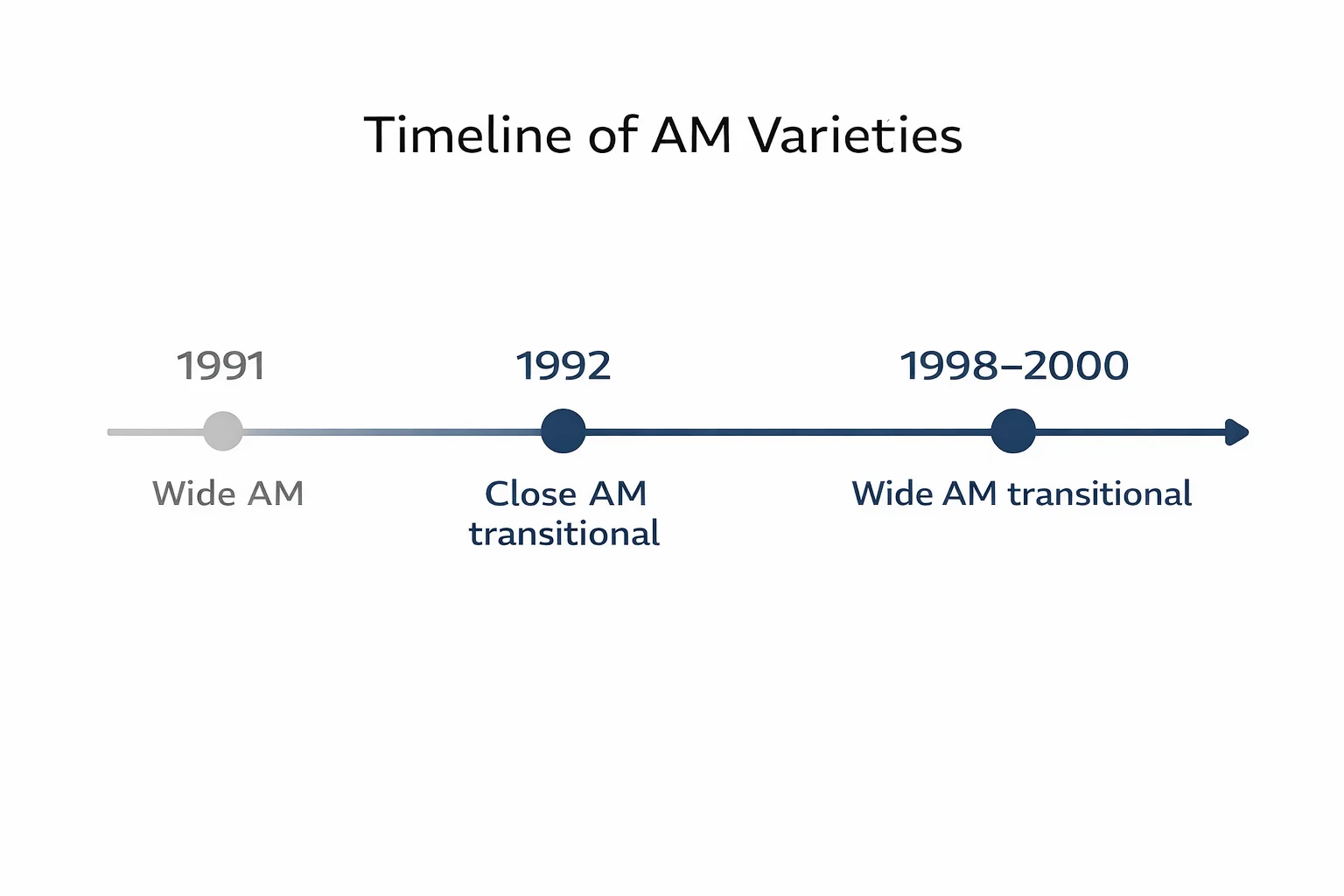
The confusion comes from timing. The real transitional Close AM business strike belongs to 1992. The years 1998–2000 have Wide AM reverses where Close AM should appear. 1991 sits between major variety headlines. That makes it easy to misunderstand.
Here we would like to explain why 1991 cents are always Wide AM in circulation, how the myth started, and how to avoid misidentification.
What Wide AM and Close AM Actually Mean
The terms refer to the spacing between the letters A and M in the word AMERICA on the reverse of Lincoln Memorial cents.
The difference is simple but precise.
Feature | Wide AM | Close AM |
Letter spacing | Clear gap between A and M | Letters nearly touch |
Base alignment | Bottoms clearly separated | Bases almost connected |
Typical business use in 1991 | Yes | No |
Wide AM shows a visible space. Close AM shows almost no separation. This spacing is not caused by wear. It is part of the reverse hub design. That distinction matters.
The 1991 Reverse: What Was Used
In 1991, business strike cents from both Philadelphia and Denver used the standard Wide AM reverse.
Proof cents from San Francisco used the Close AM style. That was normal for proofs at the time. Proof and business reverses were different hub designs.
However, in 1991, there was no confirmed crossover between those hub types for circulation strikes.
To clarify the timeline:
Year | Business Strike Reverse | Proof Reverse | Confirmed Transitional Error |
1991 | Wide AM | Close AM | No |
1992 | Wide AM | Close AM | Yes (rare Close AM business) |
1998–2000 | Close AM | Close AM | Yes (Wide AM business errors) |
The transitional mistake happened in 1992, not 1991. No major grading service recognizes a 1991 Close AM business strike.
Why the Myth Exists
The myth survives for several reasons.
First, the 1992 Close AM became widely known. Collectors learned that small spacing differences can create value. Many then searched nearby dates.
Second, photographs online often distort spacing. Lighting angle, shadow, and low resolution compress the gap between letters.
Third, zinc cents from the 1990s are prone to plating issues. Surface irregularities can visually narrow spacing.
Fourth, weak strikes or die wear reduce the definition at the base of the letters. When detail fades, the gap can appear smaller.
Finally, online marketplaces repeat unverified claims. Once one listing labels a 1991 coin as “Close AM,” others copy the description.
Repetition does not create variety.
Visual Illusions That Cause Confusion
Many 1991 cents look suspicious at first glance. Closer inspection usually reveals normal Wide AM spacing.
Common causes of misreading include:
Weak strike: the bottoms of A and M appear thick or blurred.
Die wear: metal flow reduces clarity near letter bases.
Plating swelling: zinc core expansion under copper plating alters letter edges.
Machine doubling: creates flat shelf-like edges that change visual spacing.
Each of these affects surface appearance. None changes the hub design.
True Close AM spacing is defined by the master hub. It cannot be created by circulation wear.
Understanding Hub Design Differences
Spacing between A and M is determined at the master hub stage.
The sequence is:
Master hub
Working hub
Working die
Struck coin
If the master hub has Wide AM spacing, every die derived from it carries that spacing.
Close AM is not random compression. It is an intentional design layout difference between proof and business hubs during specific years.
In 1991, business hubs were still Wide AM. The proof hub was Close AM. There is no confirmed evidence that proof reverse dies entered business strike production that year.
The 1992 Close AM business cent resulted from a proof reverse die being used in regular production. That event is documented and recognized.
No such crossover has been verified for 1991.
The Zinc Factor: Why 1991 Looks Different
The 1991 cent is a copper-plated zinc coin. Its composition is: 97.5% zinc core and 2.5% copper plating.
Zinc behaves differently from earlier bronze cents.
Common zinc-era issues include:
Plating bubbles
Surface ripples
Edge corrosion
Minor swelling
These can distort letter edges under magnification. When copper plating lifts slightly, the lower portions of letters can appear thicker.
That visual effect can reduce the perceived gap between A and M.
However, the spacing between the centers of the letters remains unchanged.
How to Properly Check a 1991 Penny
Identification should follow a simple sequence.
Confirm the date.
Use 5× to 10× magnification.
Focus on the bottom of the A and M.
Compare spacing to confirmed 1992 Close AM images.
Look for a consistent gap across multiple coins.
A true Close AM will show minimal separation. The bases almost touch. The letter legs appear tight and symmetrical.
A 1991 coin will show a visible space. Even if small, it remains present.
Do not rely on a single photograph. Always examine the coin directly.
Market Reality
There is no premium for a standard 1991 Wide AM cent. Market structure is straightforward:
Type | Market Status | Estimated Value (Typical Range) |
1991 Wide AM | Normal circulation issue | $0.01 (circulated) / $0.50–$25 in high MS Red |
Claimed 1991 Close AM | Misidentification | - |
1992 Close AM (business strike) | Rare and recognized variety | $500–$3,000+ depending on grade |
The value of a 1991 cent depends on condition and color, not AM spacing. High-grade examples in MS67 Red may carry premiums. AM spacing does not influence price for this year.
The Role of Grading Services
Major grading services do not list 1991 Close AM as a recognized variety.
If a coin truly existed, it would appear in population reports and variety attribution lists.
Absence from those records is significant.
Collectors should verify variety claims through trusted references rather than auction descriptions.
But before professional certification, try apps like Coin ID Scanner. It allows quick checks of year, design type, and technical specifications within a large coin database (more than 187,000). That helps confirm whether a coin belongs to a known transitional year before pursuing further analysis.

Why Understanding This Matters
Modern variety collecting is active. Small details generate attention. That creates opportunity but also confusion.
Misidentification leads to:
Overpaying for common coins
Spreading incorrect information
Distorting market expectations
Education protects collectors.
Understanding the 1991 penny’s correct reverse design prevents unnecessary speculation.
Separating Hype from Structure
The Lincoln Memorial series contains real transitional varieties. Those include:
1992 Close AM
1998–2000 Wide AM
These are legitimate hub mismatches. The 1991 cent does not belong in that group. The absence of a variety can be just as important as the presence of one.
Final Thoughts
The 1991 penny sits between well-known transitional years. That position creates confusion.
It does not contain a confirmed Close AM business strike. The spacing used that year was standard Wide AM.
Most claims stem from lighting, wear, plating distortion, or a misunderstanding of the 1992 transition.
The outcome is clear: small differences matter in modern varieties. But they must be grounded in documented hub changes. In the case of 1991, the myth is stronger than the evidence.