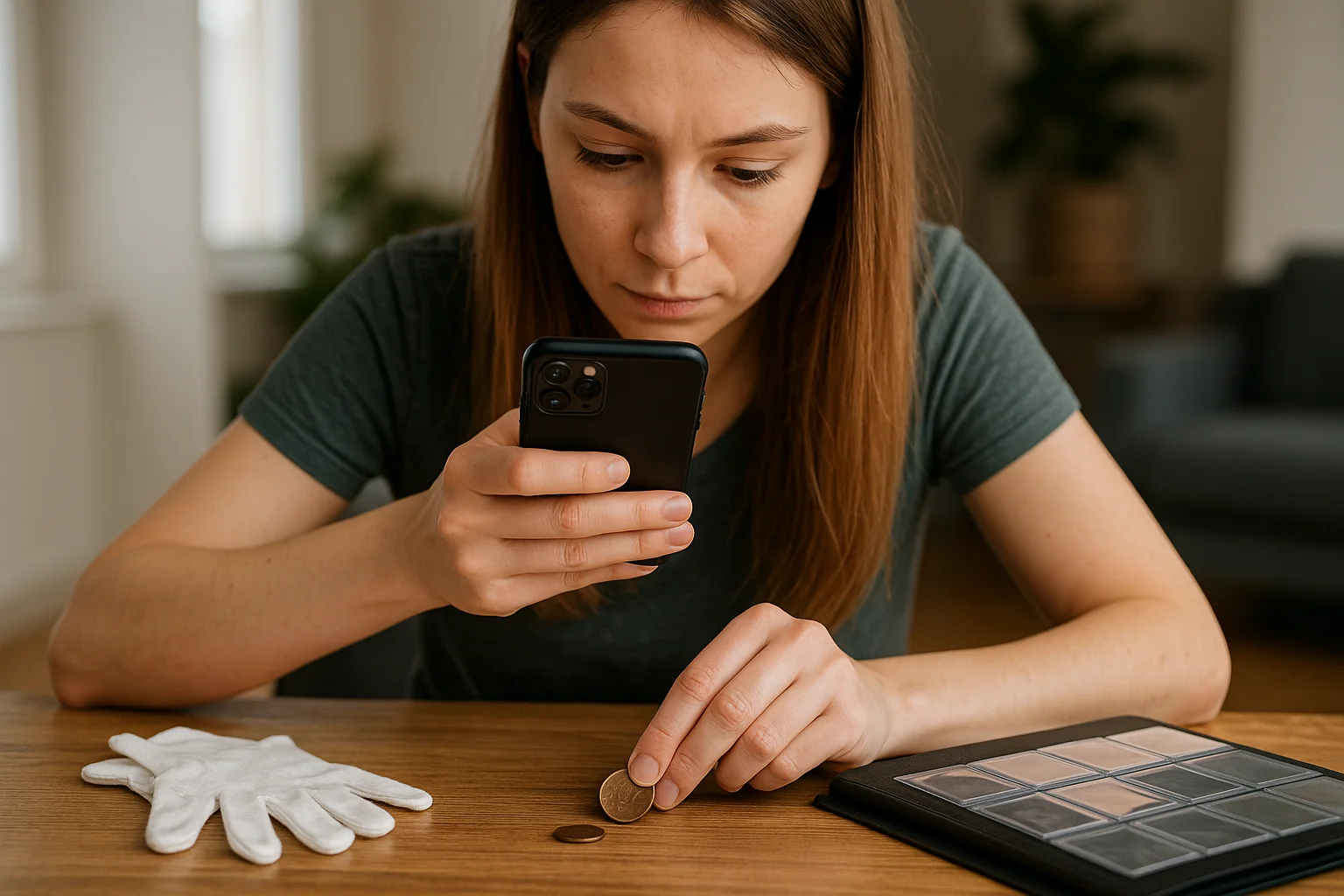
How Much Is a 1970 Penny Worth?
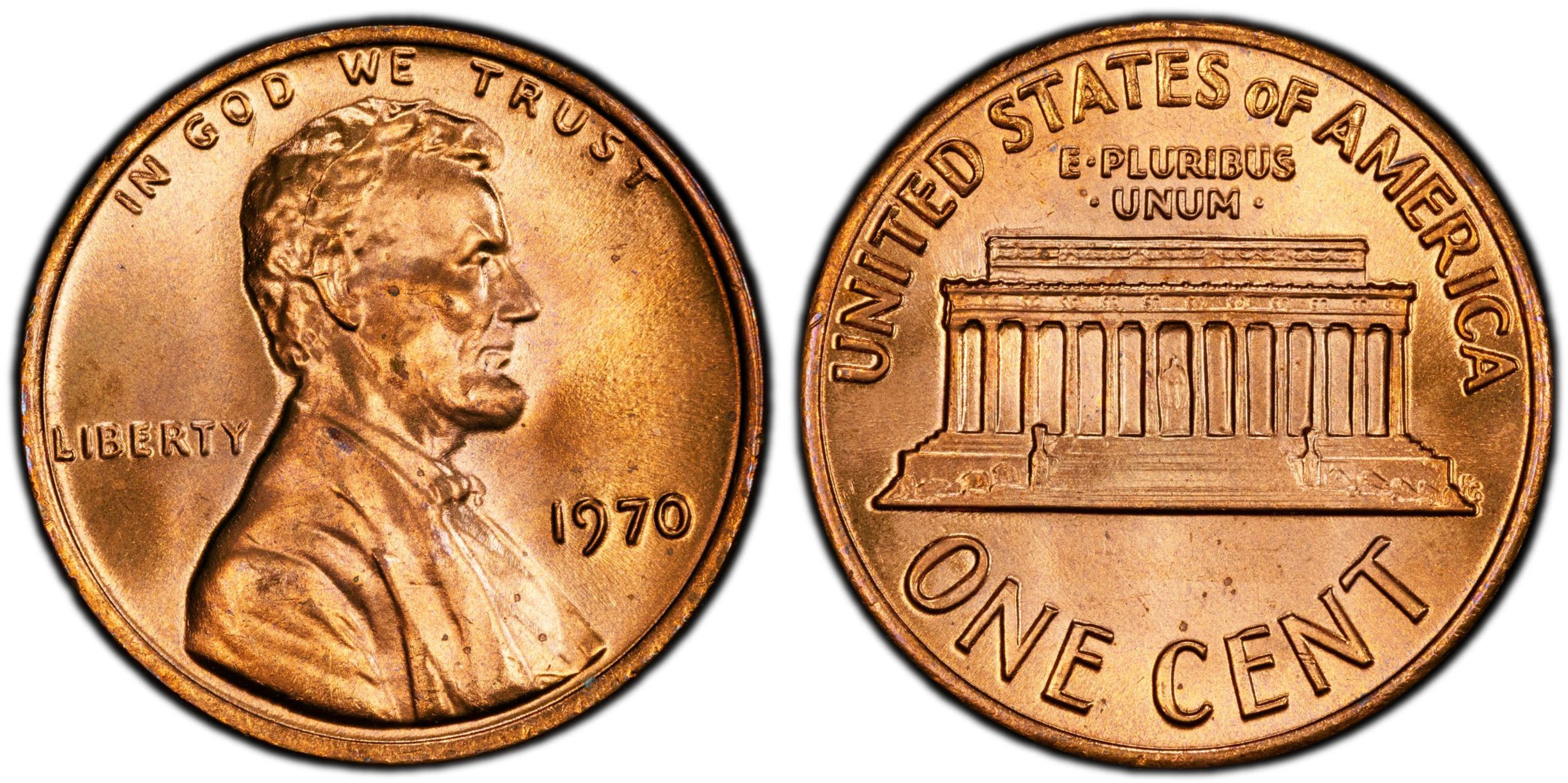
The 1970 penny is another Lincoln series item that has a face value of 1 cent, but San Francisco proof small date issues are worth up to $600.
What Is a Standard 1970 Lincoln Cent Worth?
Standard 1970 Lincoln pennies start price is $0.01. The item relies on two main factors for baseline value:
Their metal content
Their preservation state
This metallic composition creates a distinct base floor for values when coin collectors evaluate large hoards.
Year | 1970 |
Weight | 3.11 g |
Diameter | 19.00 mm |
Edge | Plain |
Metal | Mostly Copper |
1970 P & 1970 D Pennies
In worn, circulated condition, these standard business strikes hold a value of exactly one cent in the retail market. The copper content itself gives the coin a hidden advantage. At current metals prices, the raw copper inside each pre-1982 cent has a melt value of nearly two cents.
Federal law prohibits the melting of US pennies for profit. Despite this restriction, survival rates of bulk bags remain high because investors hoard them for their raw metal worth.
Uncirculated Rolls and the Red Issues
When coins avoid the wear of public circulation, they retain their original mint luster. Professional coin specialists classify copper color into three specific categories:
Brown
Red-Brown
Red
A coin with full Red luster holds the maximum premium. For an individual coin to achieve high market values, it must receive a high grade from a third-party service. A clean example at the Mint State 67 tier can command fifty dollars or more, while rare Mint State 68 issues reach hundreds of dollars.
1970 S Small Date vs. Large Date
Feature | Large Date | Small Date |
Alignment of the "7" | The top of the "7" sits noticeably below the tops of the "1" and "0" | The top of the "7" aligns perfectly level with the tops of the "1" and "0" |
The "9" Inner Loop | The long tail of the "9" curls downward and points straight down at the "7" | The inner curve of the "9" points sharply to the left toward the mint mark |
LIBERTY Stamping | Struck with bold, deeply defined, and thick lettering | Struck with weak, soft, and visibly thin lettering |
MS-67 Value | $35 | $1,500+ |
Visual Identification Checkpoints
Use a basic magnifying glass to inspect the text elements on the front of the coin.
1. Focus your attention on the word LIBERTY to the left of Lincoln's portrait.
2. On the common Large Date variety, the letters feature crisp, thick, and deep detail.
3. On the scarce Small Date variety, the word exhibits a faint, weak appearance.
4. The letters look thin and blurred because the mint used a different master hub die for that specific production run.
The High “7” Diagnostic
The most reliable test involves the alignment of the numbers within the date itself. Imagine a straight line that connects the top of the digit "1" with the top of the digit "0."
On the Large Date coin, the number "7" sits low, well below this imaginary line. On the rare Small Date variant, the top of the "7" aligns perfectly with the "1" and the "0."
The inner loop of the "9" points in a different direction. The tip of the curl points straight down toward the "7" on the Large Date, but points to the left toward the mint mark on the Small Date.
1970 S Proof Items
Most regular 1970-S Large Date proof pennies exhibit pristine surfaces. Collectors measure proof quality on a scale from 1 to 70.
A standard Proof 69 Deep Cameo coin features intense contrast between the frosted details and the reflective fields. These common coins command modest prices, usually between five and ten dollars.
A perfect Proof 70 specimen represents absolute numismatic perfection. Collectors pay significant premiums for these flawless examples, which routinely command over five hundred dollars at auction.
Item Defects
Doubled Die Obverse (DDO)
Off-Center Strikes
Clipped Planchets
Die Cuds
The S Doubled Die Obverse ranks as one of the most famous modern error coins in the entire history of United States currency. This error occurred when a misaligned hub die impressed the design onto a working die twice.
Numismatists search for standard mechanical errors from all three mint facilities. An off-center strike occurs when the coin press hits a misaligned blank metal disk. If the coin retains only 50 percent of the design but still displays the clear 1970 date, it can sell for one hundred dollars.
1970 Penny Value Chart
Item | Circulated Value | High MS Value |
P/D Business Strike | $0.01 | $2.00 |
S Large Date Uncirculated | $0.01 | $3.00 |
S Small Date Uncirculated | $35.00 | $65.00 |
S Proof Large Date | – | $8.00 |
S Proof Small Date | – | $600 |
S Doubled Die Obverse | $1,500 | $6,250 |
How to Sell Your Rare Penny?
Step 1 – Do Not Clean or Alter the Coin
Leave the penny exactly as it is. Never rub, polish, or use a chemical cleaner on it. Even minor cleaning leaves micro-abrasions that professional graders spot instantly, which can wipe out up to 80 % of a coin's numismatic value. Always handle the penny strictly by its outer edges.
Step 2 – Verify the Variety Under Magnification
Double-check that you truly have the rare Small Date variety using a 10x coin loupe. Verify that the top of the "7" sits perfectly level with the "1" and "0". If it sags below them, it is a common Large Date variety worth only face value, and will not be cost-effective to sell or grade.
Step 3 – Submit for Professional Third-Party Grading
Submit the coin to the Professional Coin Grading Service or the Numismatic Guaranty Company. If you aren't a member, a local PCGS/NGC authorized coin dealer can submit it on your behalf for a small fee.
Step 4 – Track Recent Auction Realized Prices
Check verified archival databases such as:
PCGS CoinFacts
Heritage Auctions
GreatCollections
Do not rely on speculative active eBay listings; look only at completed, sold transactions. Do not remember to check the coin-identifier.com.
Step 5 – Choose Your Selling Venue
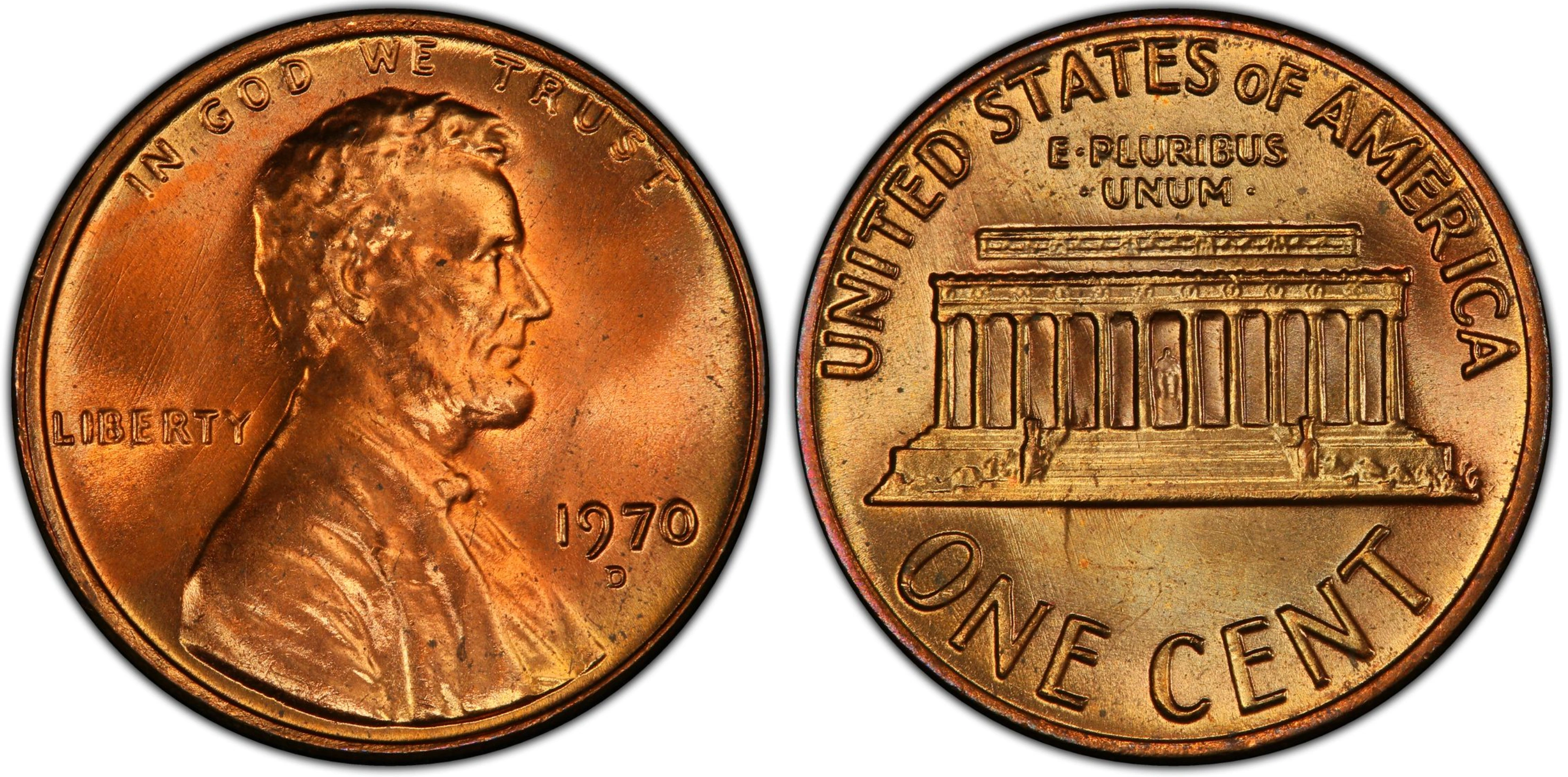
Consignment / Specialist Auction Houses – For high-grade, high-value examples, consigning with an auction house like GreatCollections or Heritage Auctions attracts dedicated registry-set collectors willing to pay a bonus.
Reputable Local Coin Dealers – if you need immediate cash, visit a dealer credentialed by the Professional Numismatists Guild (PNG). Expect an offer roughly 20–30% below market value so they can turn a profit.
Online Marketplaces – good for mid-grade varieties, but be prepared for platform fees and the logistics of secure, insured shipping.